
A timer only tells you something useful when you know what it controls. A QIUI KeyPod can schedule access to a stored physical key, while a cage may use a timer for an electronic function instead. These are separate actions, and opening a key box still leaves the physical cage lock to be opened with its key.
Start With What Happens When Time Runs Out
A timer has an object and an end action. Before comparing two products, finish this sentence for each: “When the countdown ends, this specific device does what?” A key-box timer may permit access to the box; a cage electronics timer may stop or alter a selected electronic function. Neither statement describes every model without its current manual.
The electric-chastity guide compares feature families. This page separates two kinds of countdown so a buyer does not mistake a stimulation schedule for a physical release plan.
A Key-Box Timer Controls Access to a Key
The original QIUI KeyPod is an app-controlled timed storage box. Its timer applies to access to the stored physical key under the model’s current rules. Even if the box opens at the expected time, a person must retrieve the key, identify the correct lock and manually unlock the cage. A jammed, missing or incompatible key remains a separate problem.
Confirm whether the intended key fits, which account controls the timer and what documented early opening is possible. Do not assume the original KeyPod and Metal KeyPod share the same opening or cancellation rules simply because both are key boxes.
QIUI KeyPod App-Controlled Timed Chastity Key Box

The original KeyPod stores a physical key behind app/timer-controlled box access. Its end action is not direct electronic unlocking of a cage. See the product details and confirm the selected option before ordering.
A Stimulation Timer Controls a Different Function
ThrillCage lists app E-Stim and vibration while its cage uses a physical key for release. A timer associated with its electronic function would affect that function, not magically open the mechanical lock. Confirm the current app instructions for what the selected timer actually starts, stops or changes. Never infer a safe duration or automatic unlock from a screenshot of a countdown.
The two timers also do not synchronize automatically. Setting a box access time and an app function time separately can produce different end moments. Write the intended action and independent release route before either countdown begins.
QIUI ThrillCage App-Controlled E-Stim Chastity Cage
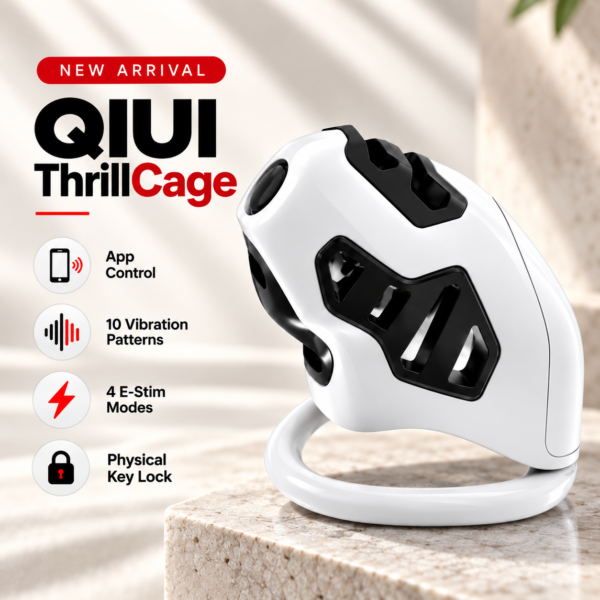
ThrillCage separates electronic E-Stim/vibration from physical-key release. Its electronic timer must not be advertised as an app cage-unlock timer. See the product details and confirm the selected option before ordering.
Follow the Release Path in a Simple Table
Use the full chain instead of a timer label alone.
| Product/function | Timed object | At the end | Human step remains |
|---|---|---|---|
| Original KeyPod | Box access | Opening permitted per current rules | Retrieve key; unlock cage |
| Metal KeyPod | Box access | Confirm model-specific opening | Retrieve compatible key; unlock cage |
| ThrillCage electronic feature | Selected stimulation or vibration control | Confirm exact app behavior | Use physical key for cage release |
Do not treat “timer ended” as proof the person has been released. Test the actual key and local access plan separately, with the device unworn.
QIUI Metal KeyPod App-Controlled Key Lock Box with Timer
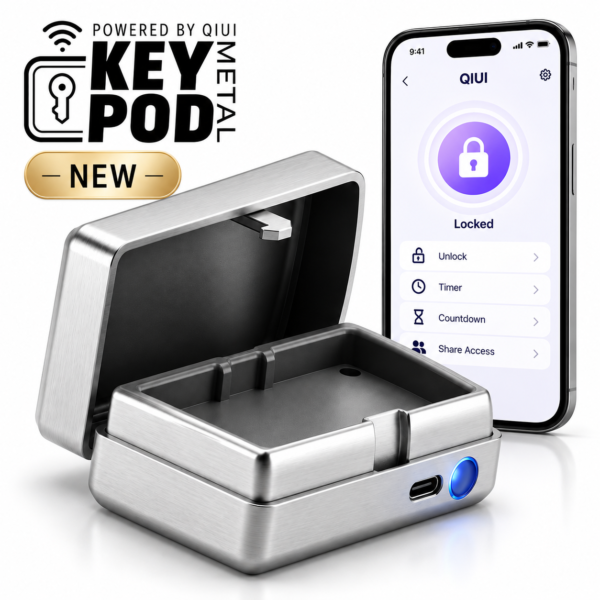
Metal KeyPod is another timed key-box format. Verify the selected model’s access rules and actual key fit rather than borrowing the original KeyPod procedure. See the product details and confirm the selected option before ordering.
Choose the Timer That Matches Your Goal
If the goal is scheduled availability of a physical key, compare key-box fit and its current early-access procedure. If the goal is a bounded electronic function, use the exact cage’s documented function timer and separately plan physical release. If the goal requires both, confirm that each product can be managed independently and that a person understands both end actions.
A box may store a key to a cage from another brand if it physically fits, but that does not make the two apps integrated. Never promise automatic synchronization or simultaneous unlock without explicit model-specific documentation.
Name the timed object, the documented end action and the remaining manual release step. That three-part sentence prevents the most consequential timer confusion.